

Golf is a game of power, precision, and dexterity, but the slightest strain and soreness can derail a golfer’s performance on the course, upsetting his routines and tempo. However, an effective and science-backed muscle recovery guide can go a long way in ensuring complete recovery for a powerful, smooth swing.
When it comes to muscle recovery, golfers must understand that it is a roadmap that boosts mobility and flexibility. With the help of science-backed recovery solutions and exercises that reduce muscle soreness and pain, golfers can achieve greater confidence and flexibility on the course.
This blog offers a comprehensive muscle recovery guide for back, shoulder, and leg pain and soreness, providing effective and practical steps to relieve pain while rebuilding resilience for golf recovery and achieving a powerful swing.
The Importance of Gentle Mobility Exercises on the Golf Course
Gentle mobility exercises are a game-changer when it comes to muscle recovery and building flexibility in golf. By combining light, controlled movements between holes and using science-backed recovery solutions such as SwingFree Mobility, golfers can keep their joints lubricated without adding strain.
Gentle mobility techniques and the use of massage products promote thoracic mobility to ease upper-back tightness, leg fatigue, and range of motion. These techniques not only reduce soreness but also increase flexibility and dexterity without causing extra strain and painful stretching. The result is a steadier, smoother swing, less compensatory tension, and sustained performance throughout the round. [1]

Shoulder-Specific Recovery Solutions
Shoulder-specific recovery solutions focus on restoring the rotator cuff strength, scapular stability, and smooth joint motion to ease muscle soreness and pain that accompany a golf swing.
Understanding Shoulder Mechanics in Golf
The shoulder works as a dynamic system where the rotator cuffs, scapular stabilizers, and thoracic spine must move in harmony to allow a smooth, powerful swing without overloading the joints. Lightweight, controlled drills that emphasize a gradual range of motion, scapular retraction, and rotator cuff activation, along with the use of SwingFree Mobility’s massage products, help reduce soreness while supporting a stable swing sequence for a pain-free performance.
Shoulder Stability Techniques for a Smooth Swing
When it comes to muscle recovery and shoulder stability, one thing that keeps the shoulder strong and steady is a well-designed exercise and massage routine. To reduce shoulder soreness for a smooth swing:
- Pull your shoulder blade slightly towards the spine to keep the shoulder spine in a good position
- Build endurance in the rotator cuff muscles to support the ball-and-socket joint
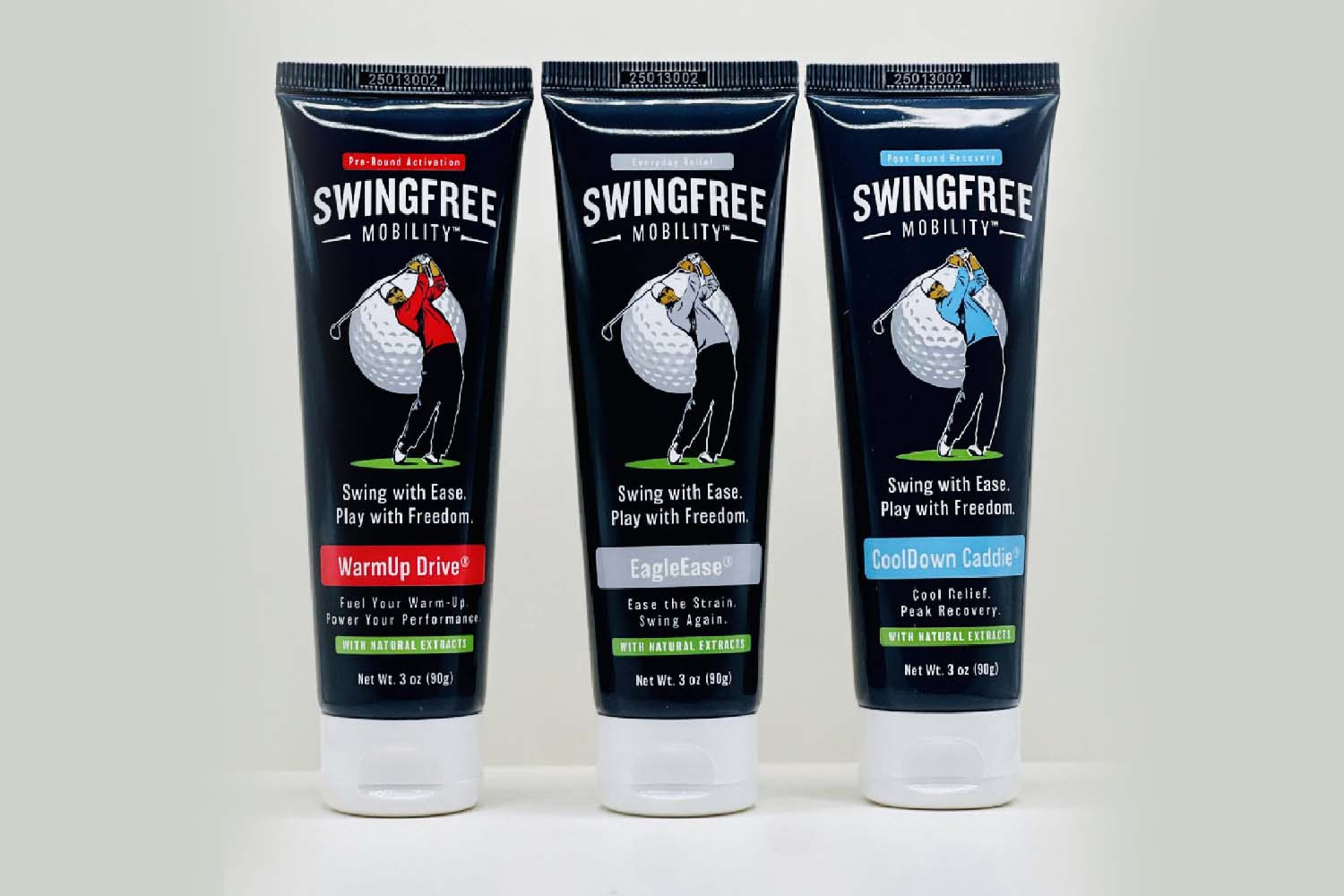
- Improve mobility in the upper back by using SwingFree Mobility’s WarmUp Drive, a specially formulated cream that preps your shoulder muscles for a powerful swing.
- Give your shoulder some rest days if soreness is high, then ease back into the routine. [2]
Back Care for a Pain-Free Swing
Every swing demands dexterity and flexibility, both of which can put a strain on your back. Protecting your back by building a balanced core strength, maintaining a tall spine, and using smooth, controlled twists can reduce back strain, allowing you to swing easily without pain.
Spinal Mobility vs. Stability: Finding the Right Balance
Spinal mobility and stability are both important for a power-packed golf swing, especially if you want to reduce soreness. A flexible thoracic spine helps your arms rotate without twisting the lower back, while the solid core and hip stability help to keep the spine protected from undue stress.

Core Strategies for Back Pain to Reduce Soreness
- Build a strong, balanced core: combine abdominal, back, and hip work to support your spine
- Stand tall or sit with a good posture to take pressure off your back
- Move smoothly and use controlled, gentle movements to reduce undue strain
- Focus on the muscles that protect the spine (core and glutes) and the back muscles without overdoing them
- Cool down your sore back muscles by using SwingFree Mobility’s CoolDown Caddie, a post-round massage cream that is formulated with aloe vera and menthol to reduce soreness in the back, allowing you to ease into your swing. [3]

Leg and Hip Recovery for Power
- Build a solid foundation by strengthening the hips and glutes to pick up power from the ground
- Add squats, lunges, and step-ups to your daily exercise routines to improve leg drive and stability
- Drill proper hip-shoulder separation to maximize torque without knee or back strain
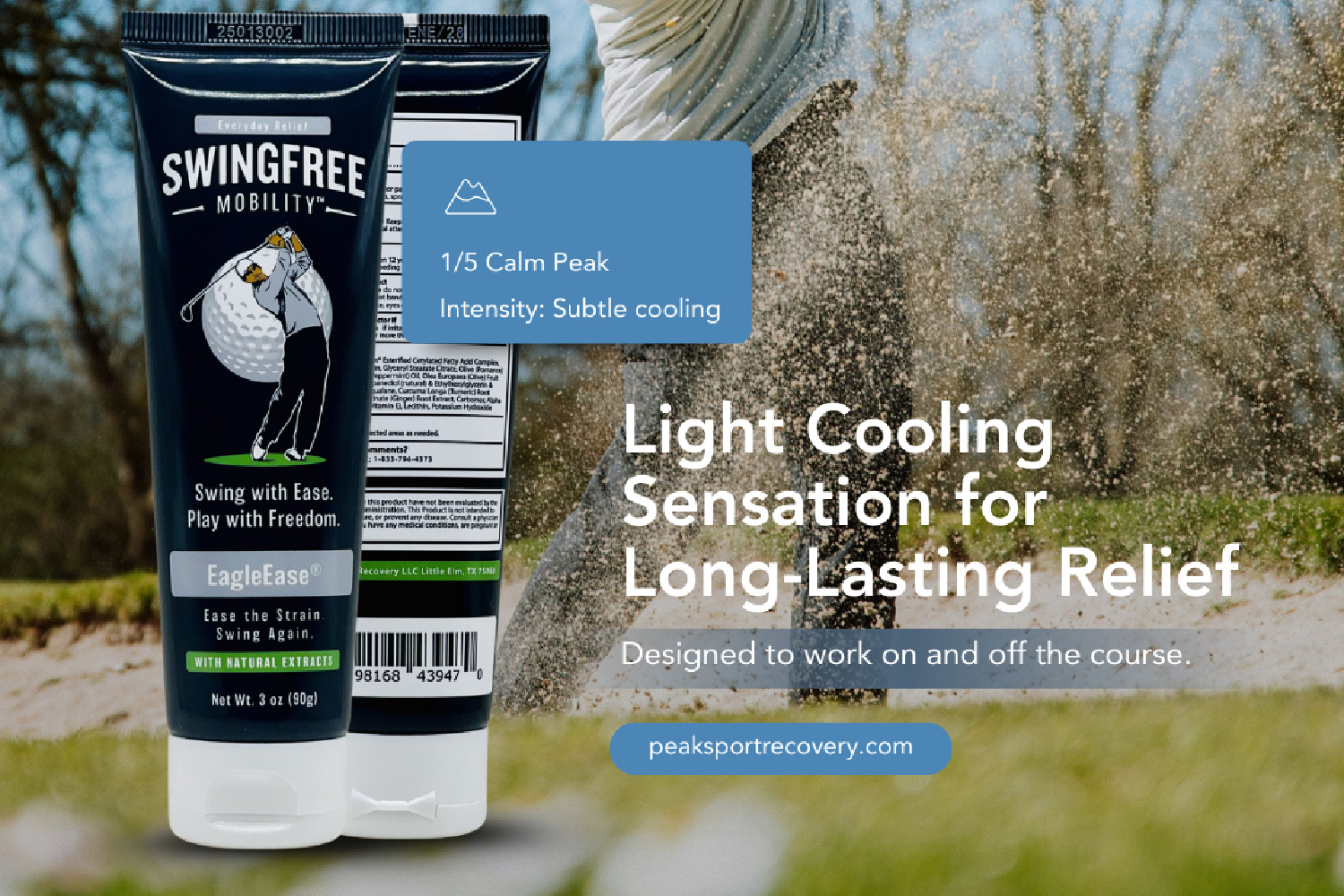
- Use SwingFree Mobility’s EagelEase, a fast-acting muscle recovery and relief formula that eases the muscle strain, enabling you to swing without any pain and worry. [4]
Sample 4-Week Muscle Recovery Plan
Here is a 4-week muscle recovery plan to reduce strain and soreness that is a part of a powerful golf swing:
| Week | Focus | Daily Structure |
| Week 1 | Foundation and Activation | 5-min mobility, glute bridges, scapular squeezes, 5-min stretches |
| Week 2 | Basic Strength | Warm up 5-7 minutes, squats, hip bridges, 5 min cool down |
| Week 3 | Endurance and Power Basics | Warm up 5-8 minutes, go for split squats, hip hinge, external rotation |
| Week 4 | Recovery and Readiness | Warm up 6-8 minutes, go for global squats, hip thrusts, and unilateral stance. |
Where to Find the Best Muscle Recovery Tools
Golf may be a game of extreme dexterity, yet many golf players fail to keep their backs, shoulders, and hips strain-free for muscle recovery. When soreness happens, the best remedy is to use SwingFree Mobility’s science-backed products that are formulated with natural ingredients. These products not only warm up and ease the aching muscles, but they also infuse a calming and warming sensation to reduce soreness, pain, and strain. Use these products for a gentle massage in your pre- and post-round routines so you can swing from the tee to green without any soreness and pain. [5]
FAQs
What is the 80-20 Rule in golf?
The 80-20 rule in golf states that about 80% of your results come from 20% of your efforts, so focus on the few key fundamentals that improve your game.
How to recover from golf soreness?
Prioritize gentle movement, adequate rest, proper hydration and nutrition, and targeted mobility work to ease soreness and support recovery.
What is the 20-20 Rule in golf?
The 20-20 rule suggests aiming to find a tempo where your backswing and downswing each take about 0.2 seconds, promoting smoother, most consistent swings.
How to treat shoulder pain from golf?
Consult a physician or clinic. Use ice and CoolDown Caddie if inflamed muscles are in the way. Ensure gentle range-of-motion moves and avoid painful activities while maintaining good posture and rehab.
References
[1]https://www.linkedin.com/company/swingfree-mobility/
[2]https://www.tiktok.com/@swingfreemobility
[3] https://x.com/SwingFree_Golf